



Yes, it can. Too much pressure, a tight nozzle or a wand held too close will scar concrete, strip sealer and make weak spots worse. Get those right and a pressure wash is one of the kindest things you can do for a driveway.
Key Takeaways
- Sound, plain concrete is usually fine at about 2,000 to 3,000 PSI. Stamped, decorative or sealed surfaces need less.
- The nozzle matters as much as the machine.
- Old or cracked slabs are the ones that get hurt.
- Test a hidden patch first, and seal once it’s properly dry.
A lot of people only ask this after the fact. They’ve hired a machine for the weekend, run it across the driveway, and found a pale stripe that wasn’t there before. Not a great feeling.
Concrete is hard, sure. But the surface layer that gives it that smooth or lightly textured finish is thin, and it’s the first thing a pressure washer hits. If you’re thinking about high pressure cleaning in Perth WA for a driveway, patio or path, it helps to know what separates a good result from an expensive mistake.
Can Power Washing Damage Concrete?
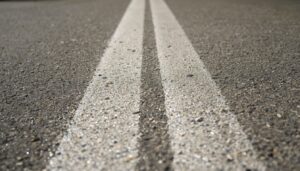
Yes. It’s also one of the best ways to clean it. Both are true.
Concrete is full of tiny pores. Oil, bore water, leaf stains, algae and plain dirt all settle in there, and pressurised water is great at flushing them out. Push it too far and the water starts taking the surface with it.
When it goes wrong, you’ll usually see one of a few things. Pale lines where a narrow jet cut in (these rarely fade). Small stones showing through as the cement paste wears off. Chips and flakes lifting away, especially on weak patches. A sealer that’s simply gone. Or an old crack that’s grown, because water got forced into it.
What PSI Is Safe for Concrete?
There isn’t one magic number, and sources don’t fully agree. For standard, sound, unsealed concrete, 2,000 to 3,000 PSI is a sensible range. You’ll see 4,000 quoted for heavy commercial floors, but that’s not something to chase at home.
Go lower on anything delicate. Stamped or decorative concrete is often cleaned at around 1,200 to 2,000 PSI, and sealed or painted surfaces are usually kept under about 1,500.
Pressure isn’t the whole story either. Detergent does plenty of the work. Let a decent degreaser soak in for a few minutes and you can ease off the force and still get a clean finish.
Why the Nozzle Matters More Than People Think
Take two machines that both read 2,500 PSI. One leaves a spotless driveway, the other leaves scars. Nine times out of ten the difference is the tip.
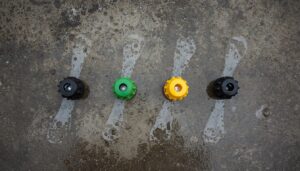
A 25-degree nozzle fans the water out and is the usual go-to for general concrete. A 0-degree tip fires a thin pencil of water that can cut into unsealed concrete in seconds. Turbo nozzles spin that narrow jet in circles, which cleans quickly and is easy to get wrong.
Distance matters too. Keep the wand about 30 to 45 cm off the surface and keep it moving in overlapping passes. Pause in one spot, even briefly, and that’s how the pale marks appear.
For big flat areas, a surface cleaner attachment is worth using. It holds the spray at a steady height, so you don’t get stripes.
When Concrete Is Most at Risk
Some slabs need a lighter touch, or a professional.
- Brand new concrete. It takes a while to cure properly, and blasting it too early can weaken the surface. Ask your builder how long to wait.
- Old, worn concrete. If it’s already crumbly or sandy, there’s not much skin left to lose.
- Cracked or flaking areas. Pressure finds weak points and makes them bigger.
- Stamped, coloured or exposed aggregate finishes. The finish is the whole point, and it’s easy to ruin.
- Sealed surfaces. Pressure that’s fine on bare concrete can strip a sealer.
Perth-Specific Things to Watch
Perth throws in a few extras that you won’t find in most generic guides.
Limestone and liquid limestone
Plenty of paths and driveways here use limestone products. They’re softer than standard concrete, so go gentler than you think you need to.
Bore water stains
Those rusty orange marks from reticulation bores are everywhere. They respond to the right treatment far better than to extra pressure. Blasting a rust stain harder mostly wastes water and risks the surface.
Sandy soil and pavers
On block paving, strong pressure can wash the sand out of the joints. Pavers then shift and sink, and the joints need re-sanding.
Summer sun
Clean in the heat of the day and the detergent dries before it’s done its job, which leaves streaks. Early morning or late afternoon is better.
How to Pressure Wash Concrete Safely
Doing it yourself is fine on a small, sound slab. Keep it methodical.
- Sweep first. Loose dirt turns into grit under pressure.
- Test a hidden patch, like a corner near the garage, and check it once dry.
- Apply detergent on low pressure and leave it for 10 to 15 minutes. Don’t let it dry out.
- Switch to the wide tip. A 25-degree nozzle is the usual start.
- Work in overlapping strokes at a steady distance, without stopping in one place.
- Rinse downhill, away from the house.
- Let it dry for at least 24 hours before sealing.
Wear eye protection and closed shoes. A stray jet can cut skin.
Should You Seal Concrete After Cleaning?
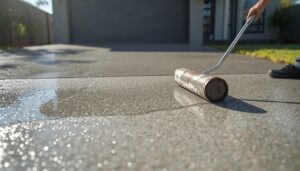
Usually, yes. A freshly cleaned slab is at its most open, so it soaks up the next oil drip or bore stain fast. A good sealer puts a barrier in the way, and it makes the surface easier to sweep and rinse later.
Patience pays here. Seal on dry concrete in dry weather, and expect to redo it every few years depending on traffic and sun.
DIY or Professional: Which Is Better?
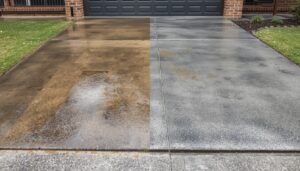
Hiring a hand-held machine for a Saturday is fine for a small, plain path. For anything bigger, older or fancier, a professional is usually cheaper than fixing a mistake.
| Situation | DIY | Professional |
| Small plain concrete path | Fine | Optional |
| Large driveway | Possible with a surface cleaner | Better |
| Stamped or coloured concrete | Risky | Recommended |
| Limestone or pavers | Risky | Recommended |
| Sealed surface | Risky | Recommended |
| Cracked or crumbling slab | Not advised | Recommended |
A trained operator picks the pressure and nozzle for the surface and has commercial gear that cleans faster with less force. At Gutters Perth, our high pressure cleaning service covers driveways, paths and other exterior surfaces across the Perth metro area. Jobs typically run about [INSERT PERTH PRICE RANGE], depending on size and surface.
One more thing. If your gutters and downpipes are overflowing onto the concrete, that’s often what stained it in the first place. Our gutter cleaning and roof repair teams can fix the source first, so the marks don’t come straight back after the clean.
Frequently Asked Questions
Can a pressure washer crack concrete?
Rarely on sound concrete. But it can make an existing crack worse, and weak or old slabs can chip or flake.
What PSI is too high for concrete?
For a home driveway, anything much above 3,000 PSI is more than you need and raises the risk of etching. Decorative, sealed and limestone surfaces need far less.
Does power washing remove concrete sealer?
It can, especially with high pressure and a narrow nozzle. Clean sealed surfaces gently and reseal when the old coat wears thin.
How long should concrete cure before pressure washing?
Fresh concrete needs proper time to cure. Ask your concreter, and if in doubt, wait longer.
Is a surface cleaner better than a wand for concrete?
On large flat areas, usually. It keeps the spray at an even height, so you avoid stripes.
How often should I pressure clean my driveway in Perth?
Once a year is common. Shaded spots that grow algae, or areas hit by bore water, may need it more often.
The Bottom Line
Power washing doesn’t automatically damage concrete. The wrong pressure, the wrong nozzle and bad timing do. Keep the PSI sensible, use a wide tip, test first, and seal when you’re done.
If you’d rather leave it to people who do this every week, call Gutters Perth on 0468 476 111 or get a free quote for high pressure cleaning in Perth WA.